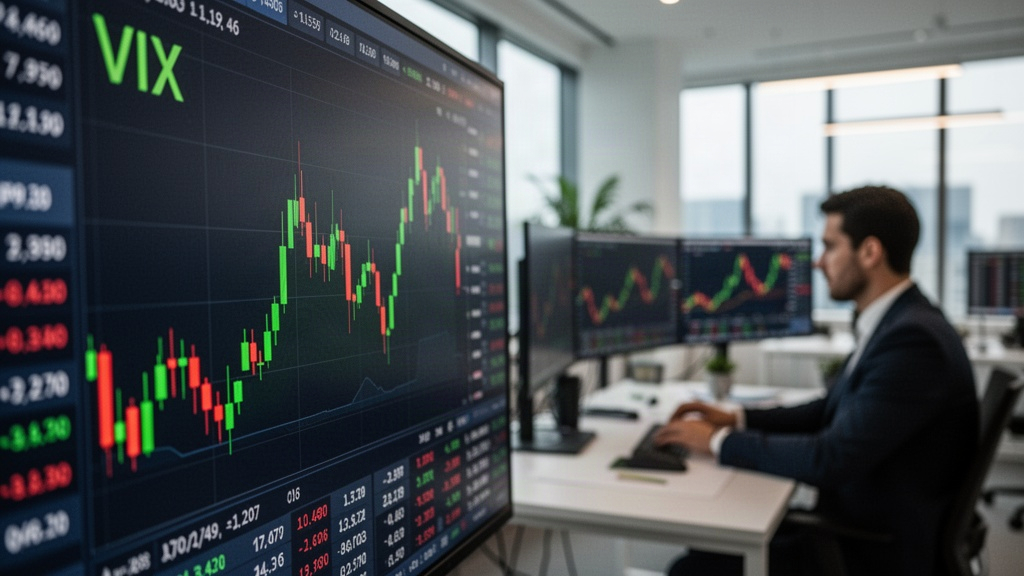
The S&P 500 is far more than a number scrolling across a financial ticker. For everyday investors, business owners, and retirement savers, the movements of this index shape the real value of their portfolios on a daily basis. Understanding how the sandp500 behaves — and why — gives you a direct edge in managing your financial decisions with greater confidence. Whether you hold index funds, individual stocks, or employer-sponsored retirement accounts, the S&P 500 sets the tone for nearly every corner of the U.S. equity market. With the index representing approximately 80% of total U.S. stock market capitalization, its swings carry weight that very few financial instruments can match.
What the S&P 500 Actually Measures
The S&P 500 tracks the stock performance of 500 large companies listed on U.S. exchanges, selected and maintained by S&P Dow Jones Indices, a division of S&P Global. These companies span every major sector of the economy — from technology and healthcare to energy and consumer goods. The index is weighted by market capitalization, meaning larger companies like Apple, Microsoft, and Amazon carry more influence over the index's daily movement than smaller constituents.
This weighting structure has a direct consequence for investors. A sharp drop in a handful of mega-cap tech stocks can pull the entire index lower, even when hundreds of other companies in the index are trading flat or higher. Standard & Poor's updates the index composition quarterly, adding or removing companies based on size, liquidity, and financial viability criteria set by the index committee.
Market capitalization, as a concept, reflects the total market value of a company's outstanding shares — calculated simply by multiplying the share price by the total number of shares in circulation. For the S&P 500, this means the index captures the aggregate sentiment of institutional investors, hedge funds, pension managers, and retail traders simultaneously. The U.S. Securities and Exchange Commission (SEC) oversees the regulatory framework within which these companies operate, providing a layer of transparency that makes the index a reliable benchmark.
Historically, the S&P 500 has returned approximately 10% annually when dividends are included. That figure comes from decades of data compiled by S&P Dow Jones Indices, and it underpins the logic behind long-term passive investing. Short-term volatility is real and sometimes severe — the index dropped over 30% in early 2020 within weeks — but the long-term trajectory has remained upward. That historical pattern is why financial advisors consistently reference the S&P 500 as the baseline against which all other investment strategies are measured.
How S&P 500 Movements Shape What Investors Actually Do
When the S&P 500 drops 2% in a single session, the psychological effect on retail investors is often disproportionate to the actual financial loss. Behavioral finance research confirms that losses feel roughly twice as painful as equivalent gains feel pleasurable. This asymmetry drives reactive selling at market lows — one of the most documented and costly mistakes individual investors make.
For business owners with company stock or equity compensation packages, index movements translate directly into net worth fluctuations. A 10% correction in the S&P 500 can reduce the paper value of restricted stock units or stock options significantly, affecting decisions around exercising options, selling shares, or reinvesting proceeds. These decisions rarely happen in a vacuum — they interact with tax planning, cash flow needs, and longer-term business goals.
Institutional players like Vanguard and BlackRock, which manage trillions in index fund assets, rebalance their holdings mechanically as the index shifts. This mechanical rebalancing creates predictable buying and selling pressure that savvy active investors track closely. When a stock is added to the S&P 500, index funds must purchase it immediately, often driving the price up before the official inclusion date.
Retirement accounts tied to target-date funds or S&P 500 index funds experience the same movements, just with a longer time horizon smoothing out the noise. For someone 30 years from retirement, a 15% drawdown matters far less than for someone five years out. The index's movements, then, do not affect all investors equally — they affect investors differently depending on time horizon, asset allocation, and emotional discipline.
Investment Strategies Built Around Index Performance
Different investors respond to S&P 500 movements with very different playbooks. Some strategies lean into volatility, while others deliberately insulate against it. The choice depends on risk tolerance, investment timeline, and how closely an investor monitors their portfolio.
Here are four approaches that investors commonly align with S&P 500 performance:
- Passive index investing: Buying and holding a low-cost S&P 500 index fund, such as those offered by Vanguard or BlackRock, captures the full return of the index over time without requiring active management. This approach benefits directly from the historical 10% average annual return.
- Dollar-cost averaging: Investing a fixed amount at regular intervals — regardless of whether the index is up or down — reduces the risk of buying at a peak. Over time, this method lowers the average cost per share across market cycles.
- Sector rotation: When the S&P 500 enters a downturn, not all sectors fall equally. Defensive sectors like utilities and consumer staples often hold their value better than technology or discretionary stocks. Rotating capital into these sectors during corrections is a deliberate risk management tactic.
- Hedging with inverse ETFs or options: More sophisticated investors use instruments that profit when the S&P 500 declines. These tools carry significant complexity and cost, making them suitable primarily for experienced traders with short holding periods.
None of these strategies guarantees positive returns. Past performance does not predict future results, and every strategy carries trade-offs between potential return and risk exposure. The right approach depends on individual financial circumstances, not on what the market did last quarter.
What matters most is consistency. Emotional decision-making — panic selling during a correction or chasing returns during a rally — statistically underperforms a simple buy-and-hold strategy over any 10-year period. The S&P 500's historical record makes a compelling case for staying invested through volatility rather than timing the market.
Reading the Index as a Forward Signal for Your Portfolio
The S&P 500 does not just reflect what has already happened in the economy — it often anticipates what is coming. Stock markets are forward-looking mechanisms, pricing in expectations about earnings, interest rates, inflation, and geopolitical stability months before those factors fully materialize in economic data.
In 2026, with interest rate policy remaining a dominant driver of equity valuations, the relationship between Federal Reserve decisions and S&P 500 performance has become more direct than ever. When rates rise, the discount rate applied to future corporate earnings increases, compressing valuations — particularly for high-growth technology companies that dominate the index's upper tiers.
For investors managing their own portfolios, watching the S&P 500's price-to-earnings ratio alongside the index level provides a more complete picture than the raw number alone. A rising index with expanding P/E ratios signals that investors are paying more for each dollar of earnings — a condition that historically precedes periods of elevated volatility or correction.
Business owners who rely on capital markets for financing, acquisitions, or IPO planning should also track the index as a barometer of investor appetite. When the S&P 500 trades near all-time highs, equity financing conditions tend to be favorable. Valuations are higher, investor confidence is elevated, and capital is more accessible. Downturns compress valuations and tighten credit conditions simultaneously, making timing and preparation genuinely consequential for corporate strategy.
The S&P 500 will continue moving every trading day, reflecting the collective judgment of millions of market participants processing new information in real time. Investors who understand the mechanics behind those movements — rather than simply reacting to them — are better positioned to make decisions that serve their long-term financial goals.