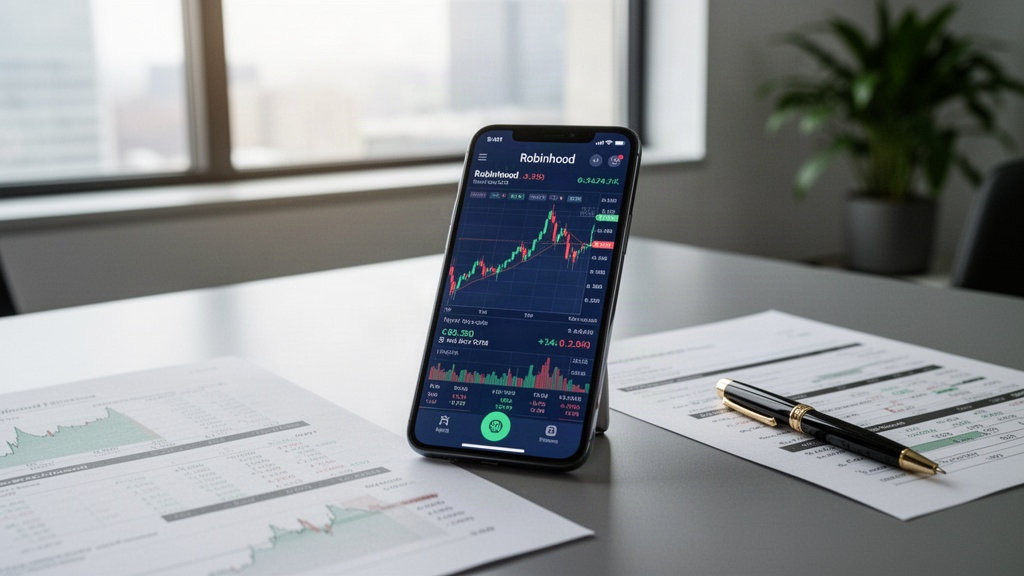
Robinhood Finance has fundamentally changed how everyday Americans approach investing. Launched by Robinhood Markets, Inc., the platform dismantled the traditional brokerage model by eliminating trading commissions entirely — a move that forced the entire industry to follow. Today, with more than 22 million users, Robinhood sits at the center of a broader shift toward democratized, mobile-first investing. Whether you are putting your first $10 into a stock or building a diversified portfolio, the platform offers tools that were once reserved for professional traders. Understanding how to use those tools effectively separates investors who grow their wealth from those who simply trade without direction.
What Robinhood Finance Actually Is — and How It Makes Money
Robinhood Markets, Inc. was founded in 2013 with a clear premise: stock trading should be accessible to everyone, not just those who can afford brokerage fees. The company went public on the Nasdaq in 2021 and has since built a diversified revenue model that does not rely on charging users per trade. That model generated approximately $1.2 billion in revenue in 2025, proving that commission-free trading can still be commercially viable at scale.
The primary revenue stream is payment for order flow (PFOF), a practice where Robinhood routes customer orders to market makers who pay for that privilege. The Securities and Exchange Commission (SEC) has scrutinized this practice extensively, and investors should understand it: your trade executes at a market maker rather than directly on an exchange, which can affect pricing by fractions of a cent per share. For most retail investors trading in moderate volumes, the difference is negligible. For high-frequency traders, it matters more.
Beyond PFOF, Robinhood earns through Robinhood Gold, a premium subscription priced at $5 per month that unlocks margin investing, larger instant deposits, and professional-grade research from Morningstar. The company also earns interest on uninvested cash held in accounts. This layered revenue structure means Robinhood has strong incentives to keep users engaged on the platform, which is worth keeping in mind when evaluating its product design choices.
Regulated by both the SEC and the Financial Industry Regulatory Authority (FINRA), Robinhood operates within the same legal framework as traditional brokers. FINRA membership means client accounts are protected by SIPC insurance up to $500,000, providing a meaningful safety net that many new investors overlook when assessing platform risk.
The Real Advantages of Zero-Commission Trading
Commission-free trading sounds like a simple perk, but its compounding effect on long-term returns is substantial. Traditional brokers once charged $5 to $10 per trade. An investor making 50 trades per year at $7 each paid $350 annually just to access markets — money that never worked for them. Eliminating that friction directly improves net returns, particularly for investors with smaller account balances where fees previously consumed a disproportionate share of gains.
Fractional shares extend this advantage further. Rather than needing $180 or more to buy a single share of a high-priced stock, investors can purchase $5 worth of that same company. This feature makes genuine diversification possible with limited capital. A portfolio of 20 different companies, each representing a different sector, is achievable with a few hundred dollars — a level of diversification that was structurally impossible for small investors before fractional share trading existed.
The mobile interface deserves credit too. Robinhood's app design reduced the cognitive friction of investing to near zero. Placing a trade takes under a minute. Checking a portfolio requires one tap. For a generation that manages everything from a smartphone, this accessibility translated directly into participation rates that traditional brokers never achieved with their desktop-first platforms.
Instant settlement on small deposits also matters practically. New users receive up to $1,000 in instant buying power while their bank transfer clears, meaning they can act on market opportunities without waiting three to five business days. That immediacy has genuine value in fast-moving markets where timing affects entry prices.
Building a Disciplined Investment Strategy on the Platform
Owning a powerful tool does not automatically produce good outcomes. The absence of trading commissions removes one barrier but introduces another: the temptation to trade too frequently. Overtrading remains one of the most documented destroyers of retail investor returns, and a platform designed for frictionless transactions can quietly encourage it.
The most effective approach on Robinhood mirrors what works in any brokerage account. Dollar-cost averaging — investing a fixed amount on a regular schedule regardless of market conditions — outperforms most attempts to time entries and exits. Robinhood supports recurring investments, allowing users to automate this process weekly or monthly without manual intervention. Automation removes emotion from the equation, which is where most retail investors lose money.
Portfolio construction should start with exchange-traded funds (ETFs) before individual stocks. A broad market ETF gives exposure to hundreds of companies through a single purchase, reducing the risk that any one company's failure damages the overall portfolio significantly. Once a core ETF position provides stability, allocating a smaller portion to individual stocks the investor genuinely understands and follows becomes a reasonable growth strategy.
Robinhood Gold's Morningstar research access gives subscribers analytical depth that goes beyond price charts. Reading analyst reports, understanding valuation metrics, and tracking earnings estimates transforms trading into informed investing. Paying $5 monthly for that access is a rational expense for anyone managing more than a few thousand dollars in assets.
Comparing Robinhood to the Competition
Choosing the right platform depends on your investing style, account size, and the features you actually use. The table below compares Robinhood with two established alternatives across the metrics that matter most to retail investors.
| Feature | Robinhood | E*TRADE | Charles Schwab |
|---|---|---|---|
| Stock & ETF commissions | $0 | $0 | $0 |
| Fractional shares | Yes | No | Yes (Schwab Stock Slices) |
| Options trading | $0 per contract | $0.65 per contract | $0.65 per contract |
| Cryptocurrency trading | Yes (integrated) | No | No (limited via partner) |
| Research tools | Basic (Gold: Morningstar) | Extensive | Extensive |
| Account minimum | $0 | $0 | $0 |
| Retirement accounts (IRA) | Yes (with match) | Yes | Yes |
| Customer support | Chat & phone (limited) | 24/7 phone & chat | 24/7 phone, chat & branches |
Charles Schwab and E*TRADE offer deeper research infrastructure and more robust customer service, which matters for investors managing larger portfolios or navigating complex tax situations. Robinhood wins on simplicity, cryptocurrency integration, and the IRA matching program, which adds 1% to every IRA contribution — a benefit with no direct equivalent at the major incumbents.
Risks Worth Understanding Before You Invest
No platform is without genuine risks, and Robinhood's history provides concrete examples worth studying. In 2020, the company faced significant criticism after a series of outages during high-volatility trading days left users unable to execute trades. System reliability during market stress is a legitimate concern for any investor who needs to act quickly during a correction or earnings event.
The gamification of investing through design choices — confetti animations, simple interfaces, push notifications about trending stocks — has drawn regulatory attention. FINRA investigated Robinhood's practices, and the company paid a $70 million settlement in 2021 related to outages and misleading communications. The settlement does not mean the platform is unsafe, but it confirms that regulatory oversight of its practices is ongoing and active.
Margin trading, available through Robinhood Gold, amplifies both gains and losses. Borrowing to invest means that a 20% drop in a position can wipe out significantly more than 20% of the invested capital once margin interest and forced liquidations are factored in. New investors should treat margin as an advanced tool that requires a clear understanding of downside scenarios before use.
Tax reporting also deserves attention. Robinhood provides Form 1099 documentation, but frequent trading generates complex tax situations. Short-term capital gains are taxed as ordinary income, which can meaningfully erode the returns that looked attractive before tax. Consulting a tax professional before year-end is a practical step for any active trader on the platform.
Where Retail Investing Is Heading Next
The competitive pressure Robinhood created has permanently altered the brokerage industry. Every major platform now offers zero-commission stock trading — a standard that did not exist before 2019. The next battleground is yield on uninvested cash, retirement account matching, and deeper integration between banking and investing products. Robinhood's expansion into high-yield savings accounts and the IRA match program signals where it sees its competitive advantage evolving.
Artificial intelligence-driven portfolio tools are entering mainstream retail platforms at speed. Personalized rebalancing suggestions, tax-loss harvesting automation, and real-time risk scoring are moving from wealth management firms to consumer apps. Robinhood has the user base and transaction data to build these features at scale, and its product roadmap suggests that direction clearly.
Cryptocurrency remains a differentiator. While Schwab and E*TRADE have stayed cautious on direct crypto exposure, Robinhood's integrated crypto trading positions it well as institutional acceptance of digital assets grows. The approval of spot Bitcoin ETFs in the United States opened new product possibilities that Robinhood is well-placed to distribute to its 22 million users without requiring them to use a separate exchange.
For investors willing to combine the platform's accessibility with genuine financial discipline, the opportunity is real. The tools exist. The cost barriers are gone. What remains is the harder work: building knowledge, maintaining patience, and treating investing as a long-term process rather than a series of short-term bets.