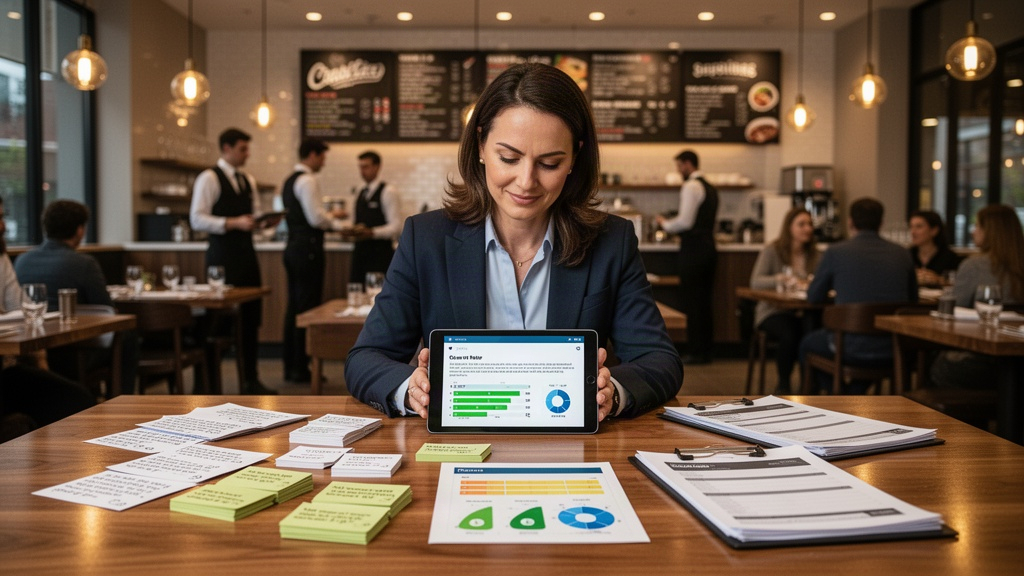
Running a restaurant chain means managing dozens — sometimes hundreds — of dining experiences simultaneously, across locations where you can't be present. Customer feedback is the closest thing to having eyes and ears in every room. It tells you what your staff can't always report, what your mystery shoppers miss, and what operational drift looks like before it becomes a crisis. Yet most chains collect feedback without a real system to act on it. They accumulate ratings, let survey responses pile up, and respond to negative reviews on autopilot. The result is data without direction. This guide walks through how to build a feedback program that genuinely shapes decisions, improves consistency across sites, and strengthens the relationship between your brand and your guests.
Build a reliable customer feedback system across your restaurant chain
Before analyzing anything, you need to know where your feedback is coming from. A restaurant chain typically generates guest input across at least six distinct touchpoints: post-visit surveys, Google Business Profile reviews, third-party platforms like Yelp and Tripadvisor, delivery apps such as DoorDash and Uber Eats, loyalty app interactions, and direct complaints to staff or via email. Each channel captures a different slice of the customer experience, and none of them alone gives you the full picture.
Start by mapping these touchpoints against the customer journey. A guest who orders delivery never enters your dining room, so their feedback will focus on packaging, accuracy, and timing rather than ambiance or server attitude. A loyalty member who visits three times a week has different expectations than a first-time guest. Segmenting feedback by channel and guest profile before you aggregate it prevents the most common mistake: averaging out signals that shouldn't be averaged.
Define your measurement framework early. The Net Promoter Score — calculated by subtracting the percentage of detractors (scores 0–6) from promoters (scores 9–10) on a recommendation question — gives you a directional read on brand loyalty. The Customer Satisfaction Score (CSAT) captures satisfaction immediately after a specific interaction. Neither metric has a universal benchmark that applies to every chain; your internal baseline, tracked consistently over time, matters more than industry comparisons.
Involve your local managers in the design phase. They know which questions guests actually answer and which ones they skip. A survey that takes four minutes to complete at the table will have far lower completion rates than a two-question SMS sent an hour after the visit. Response rate is itself a signal: if a location consistently gets fewer responses than comparable sites, that's worth investigating before you even look at the scores.
Turn comments and ratings into actionable insights
Raw feedback volume is not an insight. A thousand reviews that say "great food, slow service" tell you something obvious. The real work is grouping comments into categories that map to operational levers your teams can actually pull.
Read also: How to Invest in Stocks for Long-Term Gains: Key Strategies
Track feedback across these core categories:
- Food quality: consistency, temperature, portion size, ingredient freshness
- Service speed: wait times at order, preparation, and delivery
- Staff behavior: friendliness, accuracy, problem resolution
- Cleanliness: dining area, restrooms, visible kitchen standards
- Order accuracy: missing items, wrong modifications, packaging failures on delivery orders
- Value perception: price relative to portion size and experience quality
Sentiment analysis tools can process large volumes of open-ended comments and tag them by theme and tone. They save significant time at scale. That said, automated tools misread sarcasm, regional expressions, and context-dependent phrasing with enough frequency that human review remains necessary before any major operational decision. Use them to surface patterns, not to replace judgment.
Text analytics works best when you combine it with a structured tagging system that your team applies consistently. When a location receives ten comments in two weeks mentioning "cold fries," that's a pattern. When it's one comment among two hundred, it's an outlier. The difference matters enormously for how you respond.
Compare scores across locations with caution. A site in a high-traffic urban area will generate more feedback and face different expectations than a suburban location. Normalize your comparisons where possible, and always look at trend direction alongside absolute scores.
Close the loop with guests and local teams
Closed-loop feedback is the practice of ensuring that every piece of significant guest input gets routed to the right person, acted upon, and followed up. Without this process, feedback becomes a reporting exercise rather than an improvement tool.
A practical escalation workflow looks like this:
Read also: The environmental impact of restaurant chains: a critical look
- Feedback is received and automatically tagged by category and severity
- Issues flagged as food safety concerns (allergens, contamination, illness) are escalated immediately to the quality assurance team and handled under a separate protocol — not as standard marketing data
- Negative reviews and low satisfaction scores are routed to the relevant location manager within a defined internal timeframe
- The manager investigates, identifies the cause, and logs the resolution
- A response is sent to the guest — publicly on platforms like Google or Yelp, or directly via email for survey respondents
- A follow-up check confirms the issue hasn't recurred in subsequent feedback
Response timing matters. Guests who leave a negative review and receive a thoughtful, specific reply within 24 to 48 hours are significantly more likely to revise their perception of the brand than those who receive a generic response days later. Personalization in responses signals that someone actually read the comment, which is already more than most chains deliver.
Local managers need both the authority and the tools to resolve issues at their level. If every decision requires central approval, the loop never closes fast enough to be meaningful to the guest.
Scale improvements without losing local context
One of the hardest problems in multi-unit operations is distinguishing between a systemic issue and a site-specific one. If fifteen locations are getting complaints about the same menu item, that's a product or supply chain problem. If one location is consistently underperforming on service scores, that's a training or staffing issue specific to that site.
Build a review cadence that looks at both levels. A weekly operational report should flag location-level anomalies. A monthly cross-chain analysis should identify patterns that cut across sites. Quarterly reviews can then inform menu changes, training updates, or operational procedure revisions at the brand level.
When a location develops a practice that generates consistently strong feedback, document it and share it. Internal best practice sharing is one of the most underused levers in chain operations. A manager who figured out a way to reduce wait times during peak hours at their site has solved a problem that dozens of other managers are still struggling with.
Read also: Why You Must Pay Attention to SandP500 Movements Today
Before rolling out any change across the full network based on feedback, test it in a defined subset of locations. Pilot programs with clear measurement criteria give you real-world data on whether the change actually improves scores before you commit to a system-wide rollout. This approach also reduces the risk of a well-intentioned change creating new problems in contexts you didn't anticipate.
Protect trust when collecting and using feedback
The Federal Trade Commission published a rule in 2024 targeting fake reviews, purchased ratings, and deceptive testimonial practices. Chains that offer incentives for positive reviews, suppress negative ones, or republish reviews in misleading ways face regulatory exposure. The practical rule is straightforward: collect feedback honestly, respond to it transparently, and never condition an incentive on the valence of the review.
Each platform has its own policies. Google, Yelp, and Tripadvisor all prohibit review gating — the practice of only directing satisfied guests to leave a public review while steering dissatisfied ones toward a private channel. Read each platform's current guidelines before designing your solicitation flow, because violations can result in penalties or suppressed listings.
Feedback collection involves personal data. If your chain operates in California or collects data from California residents, the CCPA/CPRA framework governs how you store, use, and share that information. Other states have enacted similar laws, and the landscape continues to shift. Review your data practices with legal counsel, particularly if you're using third-party analytics tools that process guest comments.
Food safety feedback deserves its own protocol entirely. A comment mentioning illness, an undisclosed allergen, or a foreign object in food is not a customer experience issue to be resolved with a coupon. It requires immediate escalation to your quality assurance and operations teams, potential coordination with local health authorities, and documentation. Treating these reports as routine feedback is both operationally dangerous and legally risky.
Trust, once damaged by a mishandled complaint or a perceived lack of authenticity, is slow to rebuild across a brand with multiple locations. The chains that use feedback well are the ones that treat it as a genuine signal rather than a metric to manage.