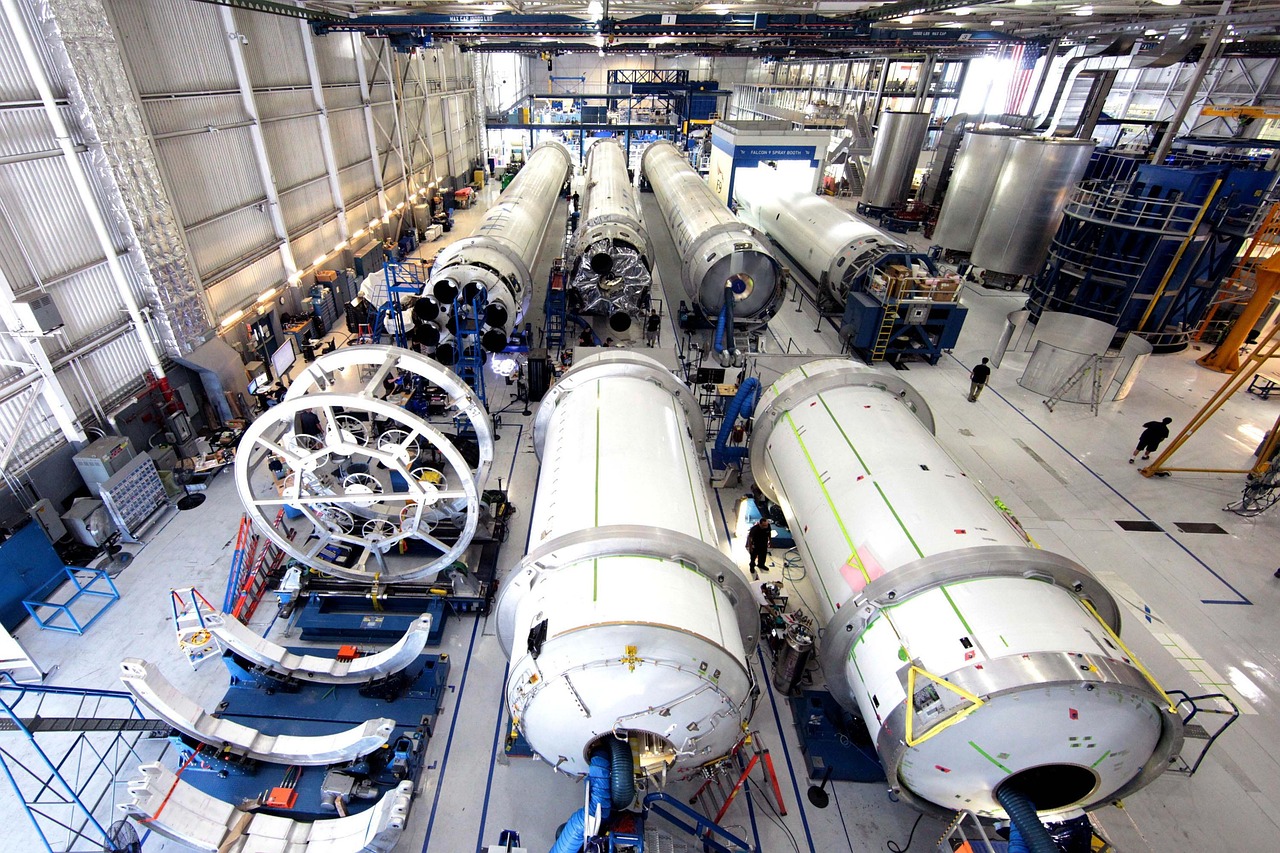
Aerospace companies sit at the intersection of technological ambition and national security. Without them, modern militaries could not sustain air superiority, project force across continents, or maintain the satellite networks that underpin nearly every military operation today. Global military spending reached approximately $2.718 trillion in 2024, a real increase of 9.4% year-on-year according to SIPRI data, and a significant share of that budget flows directly into aerospace programs. The United States alone accounted for around 37% of worldwide defense expenditure, making American aerospace firms the recipients of contracts on a scale no other national industry can match. Understanding why these companies matter requires looking at what they actually produce, maintain, and enable — not just the aircraft, but the entire architecture of modern military power.
Why aerospace companies are central to modern defense
Air power has defined military outcomes since the Second World War, and that reality has only deepened as platforms became more sophisticated and interconnected. Aerospace companies design, manufacture, and sustain the systems that give armed forces the ability to operate across all domains — air, space, and increasingly, the electromagnetic spectrum. Their output is not limited to fighter jets. The sector spans satellites, missile systems, unmanned aerial vehicles, secure communications hardware, and the software that ties these assets together.
The contributions these companies make to defense readiness fall into several distinct categories:
- Air superiority: fifth-generation fighters like the F-35, developed by Lockheed Martin, provide stealth, sensor fusion, and networked combat capabilities that adversaries cannot easily counter.
- Strategic mobility: heavy-lift aircraft and aerial refueling platforms allow forces to deploy rapidly anywhere on the planet within hours.
- ISR (Intelligence, Surveillance and Reconnaissance): airborne and space-based sensors collect the data that commanders rely on for every operational decision.
- Secure communications: military satellites built by companies like Northrop Grumman and L3Harris Technologies carry encrypted voice, data, and targeting information across theater boundaries.
- Deterrence: long-range bombers and missile systems create the credible threat that prevents conflicts from starting.
- Space resilience: the U.S. Space Force, working with commercial partners including SpaceX, is building redundant satellite constellations to protect GPS, communications, and early-warning capabilities.
- Lifecycle support: maintenance, upgrades, and sustainment contracts keep aging fleets operational for decades beyond their original design life.
NATO interoperability depends heavily on shared platforms and compatible communications standards, and aerospace companies write the technical specifications that make joint operations between allied nations possible. Without that standardization, coalition warfare becomes an exercise in managed confusion.
The technologies that shape military advantage
Modern defense advantage is not achieved through a single weapon. It emerges from an integrated ecosystem of platforms, sensors, communications links, and decision-support software working together in real time. C4ISR — Command, Control, Communications, Computers, Intelligence, Surveillance and Reconnaissance — describes this architecture, and aerospace companies build most of its components.
Read also: How to Use SandP500 to Guide Your Investment Choices
RTX (formerly Raytheon Technologies) produces the radar systems and air defense missiles that protect both forward operating bases and home territory. BAE Systems and Leonardo contribute electronic warfare suites that allow aircraft to detect, jam, or deceive enemy sensors. Northrop Grumman's B-21 Raider bomber is designed to penetrate the most advanced air defense networks ever fielded. Each of these programs requires sustained engineering investment measured in years, not months.
Space has become a contested domain. Satellite constellations now provide precision navigation, weather data, missile warning, and broadband connectivity to deployed forces. The commercial launch capabilities developed by SpaceX have directly influenced how the U.S. Department of Defense thinks about rapid satellite replenishment — the ability to replace damaged or destroyed satellites quickly during a conflict. This dual-use dynamic, where commercial innovation feeds military capability, is one of the defining features of the current era.
Autonomous systems represent the next wave. Unmanned aerial vehicles ranging from small reconnaissance drones to large strike platforms are reshaping how militaries conduct surveillance and attack missions. The software governing these systems — mission planning, target recognition, data fusion — is as strategically valuable as the airframe itself.
How aerospace companies strengthen defense readiness
Readiness is a measure of whether military forces can actually perform their missions when called upon. Aircraft availability rates, missile stockpiles, and satellite uptime all feed into that calculation. Aerospace manufacturers are responsible for sustaining those rates through maintenance contracts, spare parts supply chains, and continuous upgrades.
The F-35 Joint Strike Fighter program illustrates the scale of this commitment. With a planned fleet of more than 3,000 aircraft for the United States and partner nations, the program requires a global sustainment network spanning multiple continents. Lockheed Martin and its suppliers must keep those aircraft mission-capable across different climates, operating tempos, and basing arrangements. That is a logistics and engineering challenge of extraordinary complexity.
Read also: The hidden opportunities within aerospace companies today
General Dynamics and Boeing face similar demands in their ground vehicle and rotary-wing segments. Aging fleets need structural modifications, avionics upgrades, and new weapons integration to remain relevant against evolving threats. The defense industrial base — the network of prime contractors, subcontractors, and specialized suppliers — must maintain production capacity even during periods of reduced procurement, so that surge production is possible when geopolitical conditions deteriorate rapidly.
Supply chain resilience has become a priority concern. Semiconductor shortages exposed during 2020–2022 demonstrated how a single component category can delay entire production lines. Aerospace companies have since invested in supplier qualification programs, domestic manufacturing incentives, and inventory buffers to reduce that vulnerability.
Aerospace companies and the economics of national security
Defense aerospace is not purely a public expenditure. It generates high-skill employment, drives private-sector research, and produces technologies that eventually reach civilian markets. The National Defense Authorization Act for Fiscal Year 2025 authorized approximately $895 billion in U.S. defense spending, a figure that cascades through thousands of subcontractors, research laboratories, and component manufacturers across all fifty states.
Dual-use technology flows in both directions. GPS, developed for military navigation, became the backbone of commercial logistics, ride-sharing, and precision agriculture. Composite materials refined for military aircraft now appear in commercial airliners built by Airbus and Boeing. Artificial intelligence tools developed for battlefield data analysis are finding applications in air traffic management and predictive maintenance for civilian fleets.
The European Defence Agency has pushed member states to invest in shared aerospace capabilities precisely because the economic barriers to entry are too high for smaller nations acting alone. Pooling development costs across allies produces better-equipped forces and more efficient spending. The same logic drives multinational programs like the Eurofighter Typhoon, involving BAE Systems, Airbus, and Leonardo.
Read also: How to Invest in Stocks for Long-Term Gains: Key Strategies
Export controls add a layer of complexity. Technologies developed with defense funding carry restrictions on transfer to foreign buyers, which limits revenue opportunities but protects sensitive capabilities. Navigating the International Traffic in Arms Regulations (ITAR) and similar frameworks in the UK and Australia requires dedicated compliance infrastructure inside every major aerospace firm.
The pressures reshaping the sector right now
Cost growth and schedule delays remain the most persistent problems in defense aerospace. The Government Accountability Office has documented repeated instances of major programs exceeding original cost estimates by 20% or more, driven by technical complexity, requirements changes, and workforce constraints. Finding engineers with clearances and specialized skills is genuinely difficult in a competitive labor market.
Cybersecurity has become a non-negotiable requirement. Defense networks, design files, and supply chain communications are constant targets for state-sponsored intrusion. Aerospace companies now carry significant obligations to protect classified information under frameworks like the Cybersecurity Maturity Model Certification (CMMC), adding compliance costs that fall hardest on smaller suppliers.
The pace of munitions consumption observed in recent conflicts has exposed production capacity gaps. Missiles, precision-guided bombs, and artillery shells are being expended faster than current industrial capacity can replace them. Governments are pressing aerospace and defense manufacturers to expand production lines, but retooling factories and qualifying new suppliers takes years, not weeks.
Strategic competition with China and Russia is accelerating investment in hypersonic weapons, directed-energy systems, and next-generation fighters. Aerospace companies must sustain current programs while funding the research that will define military capability a decade from now. That dual demand on engineering talent and capital is the defining tension of the sector in 2026, and how companies manage it will determine which nations maintain a credible defense posture in the years ahead.